


Uploaded on - 4 June 2026
There was a time when a trainee fighter pilot climbed into a simulator and stared at a cockpit stuffed with mechanical gauges, analog dials, and physical switches that barely moved. Instructors would describe what the instrument should read. Technicians would manually reset positions. The whole thing was slow, expensive, and nowhere near accurate enough to replicate a real sortie.
That era is ending fast. India’s defense aviation training ecosystem is in the middle of a significant hardware shift, and the centerpiece of that change is the LCD-based Multi-Function Display panel. If you want to understand where Indian simulator procurement is heading, you need to understand why MFD panels are replacing legacy analog instrumentation at every level of the supply chain, and what that means for the engineers, procurement teams, and OEM integrators involved.
This post breaks down the technology, the procurement logic, the engineering trade-offs, and why selecting the right simulator products supplier in India is now a genuinely consequential decision for defense training programs.
Analog gauges in real aircraft are precision-engineered instruments. Reproducing them for simulator environments was always an approximation at best. Mechanical reproductions aged inconsistently, needed constant calibration, and often behaved differently from their airborne counterparts under electrical load.
The deeper problem was fidelity. A trainee pilot learning to scan six separate physical instruments under stress conditions was not getting accurate feedback on how those instruments would appear and behave in a real glass-cockpit aircraft. Modern Indian Air Force platforms like the Tejas Mk1, the Su-30MKI, and advanced trainers increasingly use multi-function display systems. Training on an analog simulator for these aircraft creates a cognitive mismatch the pilot has to then unlearn in the real cockpit.
LCD-based MFD panels eliminate that mismatch entirely. When the simulated cockpit mirrors the actual cockpit at the display level, the muscle memory and scan patterns a pilot develops in training transfer directly to the live aircraft.
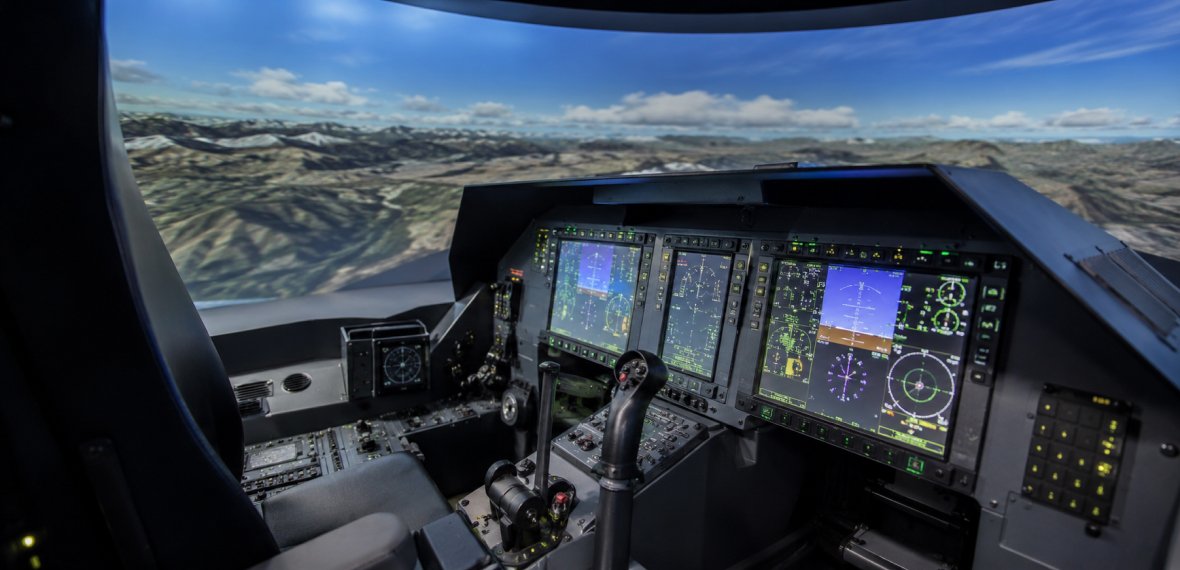
An MFD, or Multi-Function Display, is a high-brightness LCD panel designed to present navigational, weapons, systems, and situational awareness data in a configurable digital format. In a real aircraft, it replaces several dedicated analog instruments with a single reconfigurable screen. In a simulator, an LCD MFD panel reproduces this functionality using PC-driven image generation fed through high-fidelity video interfaces.
The distinction between a generic LCD screen and a proper simulator-grade MFD panel is significant and often glossed over in procurement discussions. A true MFD panel for simulator use has to meet a set of criteria that standard commercial displays simply do not:
Resolution and Size Ratio: Aircraft MFDs typically use square or near-square display ratios. A 6×8 inch or 5×5 inch format is common on fighter aircraft. Consumer LCDs are almost universally 16:9 or 16:10 widescreen. A proper simulator-grade display must match the footprint and aspect ratio of the original instrument.
Brightness: Cockpit environments introduce significant ambient light challenges. Canopy glare, direct sunlight angles, and the general lighting philosophy of military cockpits demand displays that sustain legibility above 800 to 1000 nits. Off-the-shelf consumer panels fail here consistently.
Interface Compatibility: The image generation computer driving the MFD must communicate through an interface the panel can accept cleanly. DVI-D is common; VGA persists in older legacy simulator rigs. The panel’s input tolerance has to match the system design.
Environmental Tolerance: Even in a fixed-base simulator environment, vibration from hydraulic motion platforms, temperature variation in hangar-based facilities, and long operational cycles demand a level of build quality that consumer displays are not designed to provide. MIL-STD aluminum construction, wide operating temperature ranges, and high MTBF ratings are practical requirements, not marketing specifications.
Several converging forces are accelerating the transition to all-digital cockpit simulation in Indian defense programs. Understanding these forces matters because they shape both procurement timelines and product specifications.
Indigenization Under Atmanirbhar Bharat: The push for domestic defense manufacturing has created real demand for Indian simulator products suppliers and manufacturers who can produce MFD panels, electronic panels with switches and indicators, motion control systems, and image generation computers domestically. Import substitution in simulator components is now a policy-level priority, not just a cost-saving preference.
Platform Modernization: The Tejas Mk1A, the LCH Prachand helicopter, and the HTT-40 basic trainer all feature glass cockpits. As these platforms enter operational service, simulator fleets must be upgraded to provide equivalent digital cockpit environments. You cannot train Tejas pilots on Su-7 era analog panels.
DGCA and IAF Simulation Standards: Training requirements for both military and civil aviation in India have become more stringent. Full Flight Simulators (FFS) and Fixed Base Simulators (FBS) must meet fidelity standards that increasingly specify display characteristics matching real aircraft. LCD-based MFD panels are a direct response to these standards.
Total Lifecycle Cost: The long-term economics of maintaining an analog panel simulator versus a digital one favor digital strongly. A failed mechanical gauge requires a machined replacement or a sourced OEM spare. A failed LCD panel in a digital simulator can be replaced with a standard-specification unit, often without any recalibration of the surrounding system.
Understanding the signal chain in a digital cockpit simulator helps procurement teams ask better questions and helps engineers specify systems correctly.
The core of any LCD-based MFD simulator setup is the image generation computer. This is a high-performance computing system running simulation software that generates the visual output for each cockpit display independently. In a complex fighter cockpit, you might have three to five separate MFD channels being driven simultaneously, each carrying a different data overlay: radar, navigation, engine parameters, weapons management, and threat warning.
The image generation computer feeds video signals to each MFD panel through dedicated video outputs. The panels must accept these signals cleanly, with no perceptible lag, and render them at the specified brightness and contrast levels.
Alongside the displays, the cockpit electronic panels, which include switches, push-button indicators, rotary selectors, and analog-digital interface boards, feed pilot inputs back into the simulation host through a data acquisition system. This is the I/O backbone of the simulator. Every switch activation, every dimmer adjustment, every throttle position is captured by the data acquisition system and transmitted to the simulation software as a discrete state change.
The complete loop looks like this: simulation software generates cockpit state, image generation computers render visual outputs, LCD MFD panels display them, pilots interact through electronic panels and controls, and the data acquisition layer closes the loop back to the simulation software. Every component in this chain has to be selected and matched carefully. A weak link anywhere degrades the training value of the entire system.
Most discussions about simulator display procurement default to raw specifications: brightness, resolution, contrast ratio. These matter, but they are not the complete picture. Here is a framework that captures the full set of evaluation criteria a serious procurement team should apply.
1. Geometrical Fidelity: Does the display’s physical dimensions and panel cutout match the aircraft instrument bay? This sounds obvious, but it is the single most common point of failure in simulator upgrades. An MFD panel that is 5mm wider than the specified bay either requires a modified enclosure or will not fit at all.
2. Optical Stack Matching: The surface treatment of the panel, anti-glare versus anti-reflective, circular polarizer presence or absence, glass bonding or air-gap construction, all affect how the display appears to a pilot through simulated visor helmets or NVG-compatible displays. For advanced simulation programs, this level of optical fidelity matters.
3. Input/Output Interface Compatibility: Confirm that the panel’s video input interfaces match the image generation computer’s output capability. Mismatches here require adapters that can introduce latency.
4. Thermal Management in Dense Cockpit Packaging: Multiple LCD panels in a densely packed mockup cockpit enclosure can generate more heat than anticipated. Verify the panel’s operating temperature range and thermal dissipation design relative to the enclosure’s ventilation capacity.
5. MTBF and Spares Availability: A simulator that goes unserviceable because an MFD panel failed and a replacement takes eight weeks to arrive from overseas has failed its training mission. Domestic supply and available spares from a local simulator products supplier in India who stocks the relevant components is a significant operational advantage.
6. Software-Driven Configurability: For flexible training systems that simulate multiple aircraft types, the ability to drive different MFD layouts from the same panel family reduces inventory complexity and simplifies maintenance.
Consider a realistic scenario: a training squadron is upgrading a fixed-base cockpit simulator for a glass-cockpit twin-engine helicopter. The legacy simulator uses several analog instruments that no longer match the operational aircraft’s panel configuration. The upgrade requirement is a set of LCD-based MFD panels that accurately replicate the primary flight display, multi-function display, and engine instrument display, along with updated electronic panels for switches and indicators.
A well-integrated upgrade in this scenario would involve:
Selecting LCD panels sized and configured to match the helicopter’s actual instrument positions, using rugged display panels that meet MIL-STD environmental requirements for the simulator facility.
Specifying an image generation computer with sufficient graphics output channels to drive all display positions independently, without shared memory or multiplexed outputs that could introduce synchronization issues.
Designing the electronic panels with switches and indicators to interface with a PC-based or Ethernet-based data acquisition system, ensuring that every switch state is captured at a scan rate consistent with the simulation software’s update cycle.
Validating the complete system against the aircraft’s flight manual display presentations, confirming that the simulator MFD panels render navigational and systems data in a format visually indistinguishable from the operational aircraft.
This kind of integrated approach is what separates a genuinely effective simulator upgrade from a collection of individually acceptable components that underperform as a system.
India’s simulator manufacturing ecosystem has matured considerably over the last decade. What was once almost entirely dependent on imported subsystems from European and American vendors has developed a credible domestic supply base covering display panels, electronic panel assemblies, data acquisition systems, image generation computing, motion control, and mockup structures.
For defense customers operating under indigenization mandates, this matters practically and procedurally. A domestic simulator products supplier in India who manufactures or supplies LCD panels for MFD simulation, electronic panels with switches and indicators, image generation computers, and I/O systems can support a complete simulator build or upgrade under a single supply chain. This simplifies program management, reduces import compliance overhead, and ensures that spare parts and technical support are available within the country.
The industrial computers and computing infrastructure used in simulator image generation are also increasingly being sourced domestically as Indian manufacturers build capability in MIL-grade computing systems.
For programs requiring portable testing or field-level validation of simulator subsystems, portable computers with rugged construction and compatible I/O are also part of the supply conversation.
The movement toward all-digital cockpit simulation in India is not a trend driven by preference or novelty. It is a response to a genuine operational need: modern Indian military and civil aviation aircraft use glass-cockpit systems, and training platforms must match them.
LCD-based MFD panels are the hardware foundation of this shift. Getting their specification, integration, and sourcing right determines whether a simulator program achieves the training fidelity it was designed to provide. The engineering decisions, from display brightness and aspect ratio to image generation compute capacity and data acquisition scan rates, all have direct consequences for what a trainee pilot actually learns.
India now has the domestic supply chain capability to support these programs without depending entirely on imported subsystems. For procurement teams, program managers, and simulator integrators working in the Indian defense training space, that supply chain is worth understanding in detail before the next upgrade cycle begins.
FAQ
What is an LCD-based MFD panel and how is it used in flight simulators?

An LCD-based Multi-Function Display (MFD) panel is a high-brightness, rugged flat-panel display designed to replicate the digital instrument screens found in modern glass-cockpit aircraft. In flight simulators, these panels are driven by image generation computers that render navigational, weapons, and systems data in real time. The result is a cockpit environment that visually matches the operational aircraft, making training more directly transferable.
Why are Indian defense simulators moving away from analog instruments?
Modern Indian Air Force and Navy aircraft, including platforms like the Tejas Mk1A and advanced helicopters, use fully digital glass cockpits. Training on analog simulators creates a cognitive mismatch for pilots who then transition to these aircraft. LCD-based digital panels eliminate this gap. Additionally, digital systems are more cost-effective to maintain, easier to upgrade, and better suited to meeting current fidelity standards.
What specifications should I look for in an MFD panel for a defense simulator?
Key specifications include panel size and aspect ratio matching the target aircraft’s instrument bay, brightness above 800 nits for cockpit ambient light conditions, MIL-STD environmental compliance, compatible video input interfaces (DVI-D or VGA), wide operating temperature range, and a high MTBF rating. Physical dimensional accuracy is as important as display performance specifications.
What is the role of the data acquisition system in cockpit simulators?
The data acquisition system captures every pilot input from the simulator’s electronic panels, switches, indicators, throttle controls, and other physical interfaces, and transmits these inputs to the simulation software as discrete state changes. It closes the feedback loop between the pilot’s physical actions and the simulation’s response. Without a reliable, high-scan-rate data acquisition layer, even the best display system will produce an unresponsive or lagging simulation experience.
Can a domestic simulator products supplier in India supply the full system for a cockpit simulator?
Yes. Indian suppliers with established capability in LCD display panels, electronic panel manufacturing, data acquisition systems, image generation computing, and motion control can support a complete cockpit simulator build. This is increasingly preferred for defense programs under indigenization requirements, and it simplifies procurement, reduces import timelines, and ensures domestic availability of spare parts and technical support.
How does the image generation computer connect to multiple MFD panels in a simulator cockpit?
The image generation computer uses multiple dedicated graphics outputs, each assigned to a specific display channel. Each MFD panel in the cockpit receives its own independent video feed. The simulation software manages which data is routed to which display channel. This architecture ensures that each panel renders its assigned information without shared memory constraints or synchronization delays.
What is the difference between a fixed-base simulator and a full flight simulator in terms of display requirements?
Both require the same standard of display fidelity in terms of resolution, brightness, and dimensional accuracy. The primary difference is that a full flight simulator on a motion platform introduces vibration loads that make MIL-STD environmental compliance more critical. Display panels in a full flight simulator must maintain performance under the mechanical stress of the motion system in addition to standard operational conditions.
How long do LCD MFD panels typically last in simulator environments, and what maintenance is required?
A properly specified rugged LCD panel with a 50,000-hour MTBF rating can sustain over a decade of intensive simulator operation before requiring replacement. Maintenance is minimal: periodic cleaning of the display surface, monitoring for backlight brightness degradation over time, and confirming input interface integrity. The dramatically lower maintenance burden compared to analog instruments is one of the strongest practical arguments for the all-digital transition.