


Uploaded on - 23 December 2025
In environments where failure is not an option, technology must perform without compromise. From defense operations and disaster response to oil rigs and remote industrial sites, professionals rely on devices that can survive far more than everyday office use. This is where military grade laptops stand apart. Designed to function under extreme pressure, these systems are built for dust, shock, vibration, temperature fluctuations, and continuous field use. Unlike consumer laptops that prioritize slim design, military grade systems prioritize reliability, durability, and mission continuity. As industries increasingly operate in unpredictable and high-risk conditions, the demand for rugged, field-ready computing continues to rise. Understanding why these laptops are trusted across critical sectors helps decision-makers choose the right technology for demanding environments.
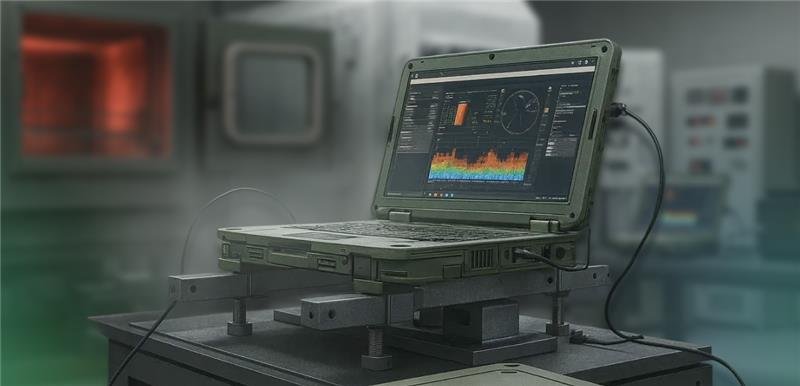
Military grade laptops are rugged computing systems engineered to meet strict durability and performance standards. Most of these devices are tested against MIL-STD-810 specifications, a U.S. Department of Defense standard used to evaluate equipment reliability under extreme conditions.
These features make them suitable for environments where standard laptops fail quickly.
High-risk environments expose devices to constant movement, drops, and vibration. Whether mounted in vehicles or carried across rough terrain, computing equipment must withstand physical stress without data loss or system failure.
Military, industrial, and outdoor operations often face:
Military grade laptops are designed to operate consistently despite these challenges.
In defense, emergency services, or industrial control systems, a device crash can delay operations or cause safety risks. Reliability is not optional, it is essential.
Military grade laptops are constructed using rugged materials such as magnesium alloy frames and sealed ports. This protects internal components from environmental damage and mechanical stress.
These laptops maintain stable performance even when exposed to harsh conditions. Cooling systems, industrial-grade components, and controlled thermal designs ensure reliability during long operating hours.
Unlike consumer laptops with short refresh cycles, military grade systems are supported for years. This ensures:
Many models support hardware-based security, encrypted storage, and secure boot options, making them suitable for sensitive operations.
Military grade laptops by Arise-O-Tech are trusted across sectors where performance and durability are critical.
Each of these environments demands computing that can operate reliably without constant support.
Testing against military standards such as MIL-STD-810 helps simulate real-world conditions including shock, vibration, temperature extremes, and humidity. While not exclusive to military use, these standards provide a benchmark for durability and reliability recognized across industries.
Before investing, evaluate your operational needs carefully.
Selecting the right configuration ensures the device matches both performance and durability needs.
As operations move into harsher, more unpredictable environments, technology must adapt accordingly. Military grade laptops and screens have become the first choice for professionals who cannot afford system failures in the field. Their durability, reliability, and long-term value make them a practical solution for high-risk and mission-critical applications. If your work environment demands consistent performance beyond office conditions, investing in rugged computing is a strategic decision.
FAQ
Are military grade laptops only used by the military?

No. While originally designed for defense use, they are widely adopted in industrial, commercial, and emergency response sectors.
Do military grade laptops cost more than regular laptops?
Yes, but they offer longer lifespans, reduced downtime, and lower replacement costs, making them cost-effective over time.
What standards define military grade laptops?
Most are tested against MIL-STD-810 standards, which evaluate durability under extreme environmental conditions.
Can military grade laptops run standard software?
Yes. They support common operating systems and enterprise applications like standard laptops.
Are military grade laptops portable?
Despite their rugged design, many models are optimized for portability and field use.